Why food allergen components matter in a serum IgE panel
Food hypersensitivity in dogs and cats presents clinically in ways that frequently overlap with environmental atopic dermatitis: non-seasonal or year-round pruritus, recurrent otitis, and gastrointestinal signs. Distinguishing IgE-mediated food sensitisation from other mechanisms has diagnostic value when guiding elimination diet protocols. The components added in PAX v2.0 represent proteins with confirmed IgE-binding relevance, identified through the same AllerSIGHT study of over 6,000 samples described in Part 1.
Grains and Seeds
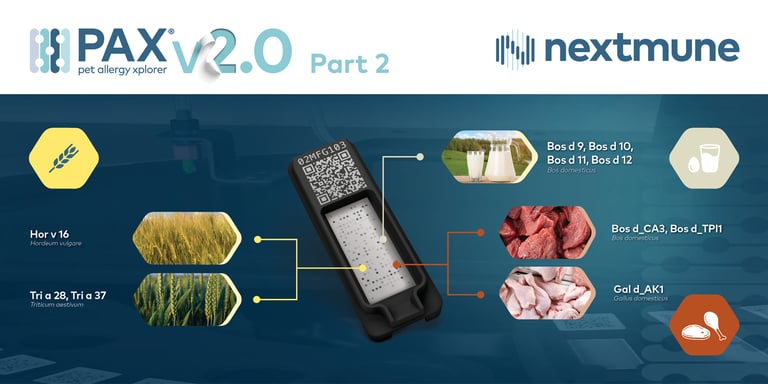
Hor v 16 (barley, Hordeum vulgare) and Tri a 28 and Tri a 37 (wheat, Triticum aestivum) are added to the grain group. Wheat and barley are ubiquitous in commercial pet foods, and IgE sensitisation to storage and structural proteins within these grains has been documented in dogs. The addition of specific molecular components allows differentiation between genuine sensitisation and cross-reactive responses — clinically meaningful when interpreting results alongside dietary history.
Milk and Eggs
Four new bovine milk components are added: Bos d 9, Bos d 10, Bos d 11, and Bos d 12 (Bos domesticus). These are milk caseins and related proteins.Cow's milk proteins are found in a range of commercial veterinary diets, including some novel-protein formulations where dairy derivatives appear in the ingredient list. Molecular-level identification of which whey or casein fractions are driving sensitisation adds precision to dietary management recommendations.
Meats
Two new beef components are included: Bos d_CA3 and Bos d_TPI1 (Bos domesticus). For chicken, Gal d_AK1 (Gallus domesticus) is added. Beef and chicken remain among the most commonly implicated proteins in canine food hypersensitivity, yet serum testing for them has historically relied on crude extract-based measurements prone to cross-reactivity. These new recombinant and native components improve specificity and help distinguish primary sensitisation from cross-reactivity driven by shared epitopes between, for example, bovine milk and beef proteins — a clinically relevant distinction when advising on hydrolysed or novel protein diets.
The broader picture
PAX v2.0 does not represent a departure from what PAX has always offered — it represents its logical continuation. The evidence base has grown, the technology to identify clinically relevant components has matured, and the panel now reflects that. For vets managing patients with complex, multi-trigger allergic disease, the expanded food allergen section offers a more complete picture without requiring additional testing steps. Everything remains within a single panel, a single sample, a single report.
PAX 2.0 is available from 1 August 2026. For questions, contact your Nextmune representative.
Sign up to our monthly newsletter
Receive the latest news, great promotions, exclusive discount codes and tips & advice from our specialists.
Share article: