What is a house dust mite?
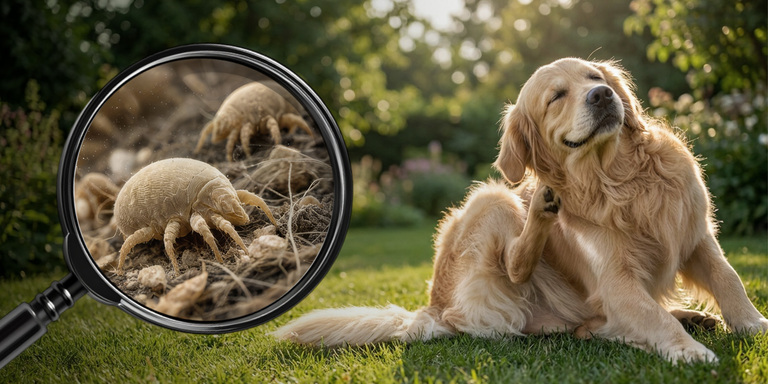
A house dust mite is a microscopic, spider-like creature invisible to the naked eye. It lives mainly on skin flakes from humans and animals and is often found in mattresses, pillows, duvets, curtains, carpets and upholstered furniture.
It's not the house dust mites themselves that cause allergic reactions, but the allergens that come from their droppings and body parts. In sensitive people and animals, these allergens can lead to various symptoms.
How common is house dust mite allergy in pets?
House dust mite allergy appears to be surprisingly common in pets. Research testing 60,130 dogs showed that 73.5% reacted positively to house dust mite allergens. In cats, this percentage was even higher: of the 6,101 cats tested, 83.8% reacted positively!
These figures show that house dust mites can play an important role in allergic reactions in both dogs and cats.
What has recent research demonstrated?
For a long time, it was assumed that exposure to house dust mites occurred mainly indoors. However, new research from Singapore suggests that the story may be more complex.
For this study, 1,171 outdoor air samples were collected in 33 different countries. In addition, air samples were taken in 156 apartments in Singapore, both inside and outside the home.
The researchers discovered that DNA from house dust mites was present worldwide in outdoor air samples. The most commonly found species was Dermatophagoides pteronyssinus, one of the main causes of house dust mite allergy.
In Singapore, this house dust mite was found in:
-
58.4% of indoor air samples
-
21.2% of outdoor air samples
What do these results mean?
The results suggest that exposure to house dust mite allergens may not be limited to the home. This could explain why some people and animals continue to experience symptoms, despite intensive cleaning and measures indoors.
Although reducing allergens in the home remains important, these findings show that a broader understanding of exposure and protection may be necessary. People and animals may also come into contact with house dust mite allergens outside the home which could account for their persisting allergic reactions.
How can you reduce exposure to house dust mite allergens?
Although it's not possible to completely remove house dust mites from the living environment, various measures can help reduce the amount of allergens. Regular vacuuming, washing textiles at high temperatures, and keeping sleeping and resting areas of humans and animals clean remain important components of good allergen management.
However, as evident from the recent research results, additional precautions might be necessary. A broader approach is crucial, looking not only at combating house dust mites, but also at reducing allergens in the immediate living environment.
Practical tips to reduce house dust mite allergens:
- Use a damp towel or wipes after walks to wipe off mites from the fur
- Keep pets out of bedrooms where mites thrive on mattresses and bedding
- Use anti-mite pet beds and bedding covers
- Wash bedding and soft toys weekly at 60°C
- Vacuum regularly with microfiltration bags and minimize carpets and upholstered furniture
- Lower indoor humidity below 45% and keep room temperature at 21°C or less
- Use allergen-neutralizing sprays like Pet's Relief® Allergone to alter mite droppings
- Brush and bathe pets regularly with soothing shampoo to remove allergens from their coat
- Replace air filters regularly, use allergen-control varieties
Flare-ups can still occur especially if the animal is mostly outdoors, so other measures might be necessary to keep it as comfortable as possible.
Support in reducing allergens - Allergone
For people and animals who are sensitive to house dust mite allergens, reducing the allergen load can be an important step. Allergone is developed to encapsulate and capture allergens from, among others, house dust mites. This means these allergens can be spread less easily through the air and exposure in the living environment is reduced.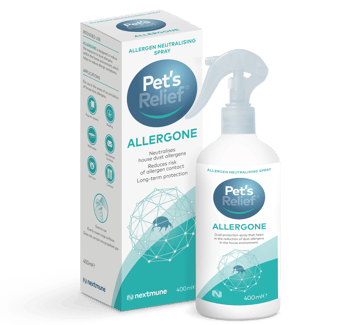
Allergone can be applied to various surfaces in the home, such as carpets, upholstered furniture and curtains, where allergens can accumulate. This applies especially to warm and humid places, because house dust mites develop most easily there. As part of a broader approach, this can contribute to a comfortable living environment for both humans and animals.
Read more about Allergone here!
References:
Gusareva, E. S., Vettath, V. K., Gaultier, N. E., Sadovoy, A. V., Dacanay, J. G., & Schuster, S. C. (2026). Dermatophagoides pteronyssinus in ambient air bioaerosols. Journal Of Allergy And Clinical Immunology Global, 5(3), 100667.
Subscribe to our newsletter
Subscribe to our newsletter and don't miss our latest innovations in the fields of allergy, dermatology, and specialized pet nutrition.