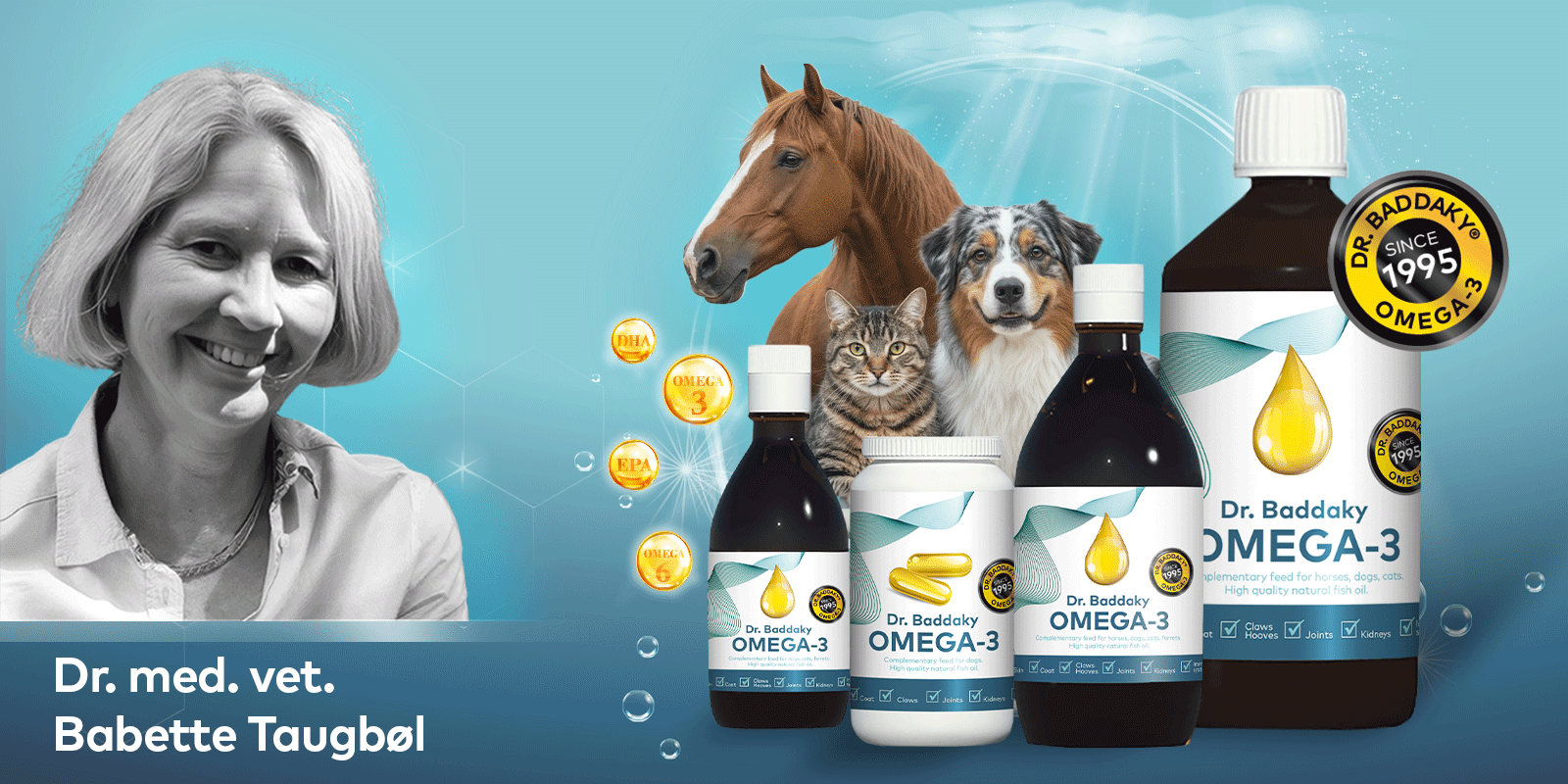
Omega-3 or omega-6 – does it matter?
In short: yes. Our patients usually get plenty of omega-6 from their food, but often too little of the marine omega-3 fatty acids EPA and DHA. These two in particular have the best evidence – for skin, joints, heart and beyond.
My own journey with omega-3 began in 2005 with a randomised, double-blind, multicentre study of a fish- and borage-oil-rich diet in atopic dermatitis. Since then, the evidence base has expanded considerably. In this post I summarise what we know today – and what it means for daily practice.
Two families, two roles
Omega-3 and omega-6 are essential polyunsaturated fatty acids. The body cannot make them itself, and they are incorporated into all cell membranes.
- Omega-6 (linoleic acid, LA): found in practically all plant oils, maize and concentrated feed. Through ceramide formation, LA is important for the epidermal barrier and reduces transepidermal water loss.
- Omega-3 (alpha-linolenic acid, ALA; eicosapentaenoic acid, EPA; docosahexaenoic acid, DHA): ALA is found in linseed, rapeseed and camelina oil as well as in grass. EPA and DHA come mainly from fish oil – it is above all EPA and DHA that have a pronounced anti-inflammatory effect.
The ratio: In humans, an omega-6 : omega-3 ratio of about 5:1 is considered favourable, whereas the Western diet is around 20:1. For dogs and cats, the National Research Council (NRC) recommends staying below 26:1; more recent work considers a ratio below 10:1 more sensible (Burron et al., 2024).
But note: the ratio says nothing about the total amount. What matters is the absolute amount of EPA and DHA in mg per kg body weight.
How EPA and DHA work
EPA and DHA competitively inhibit the arachidonic acid cascade. The prostaglandins, thromboxanes and leukotrienes formed from EPA and DHA are markedly less pro-inflammatory than those derived from omega-6.
More interesting is a second mechanism: the resolution of inflammation is not a passive fading away but an active process. EPA and DHA give rise to specialised pro-resolving mediators (SPMs) – resolvins, protectins and maresins. They end inflammation, reduce pain, and promote wound healing and tissue regeneration (Serhan & Levy, 2018).
Because chronic inflammation accompanies many diseases, the range of applications is broad.
What studies show in animals
-
Atopic dermatitis (dogs): Omega-3 improved pruritus and coat quality (Logas & Kunkle, 1994; Mueller, 2004) and reduced the need for prednisolone (Bond & Lloyd, 1994) and ciclosporin (Müller et al., 2016). Oclacitinib plus fish oil was more effective than oclacitinib plus sunflower oil (Nishiyama, 2023). Allow 6–12 weeks for a response.
-
Symmetrical onychomadesis: In dogs on an omega-3-rich diet, fish oil was as effective as ciclosporin (Ziener & Nødtvedt, 2014).
-
Cats: Fewer data, but pruritus improved in 16 of 28 cats (Harvey, 1991); miliary dermatitis resolved in 3 of 5 cats (Lechowski et al., 1998).
-
Heart: Fish oil – not ALA – reduced ventricular arrhythmias in Boxers (Smith et al., 2007). In mitral valve disease, omega-3 reduced volume overload (Carvalho et al., 2018).
-
Keratoconjunctivitis sicca: Oral omega-3 enhanced the effect of topical tacrolimus (Alves Silva, 2018).
-
Other areas: Kidney, hyperlipidaemia, cognition, behaviour, convalescence. In gastroenterology and oncology, better studies are still needed.
-
Horses: Fish oil lowers inflammatory markers in arthritis and equine asthma. The ACVIM consensus statement (2016) recommends 1.5 g DHA orally per day for two months in equine asthma.
Dosing: think in mg per kg
The studies use considerably higher amounts than many feeds provide. Guideline values for dogs (daily, after Vendramini et al., 2025, and Kwochka, 2016):
|
Indication |
EPA (mg/kg/day) |
DHA (mg/kg/day) |
|
Skin / atopic dermatitis |
40–60 |
25–30 |
|
Osteoarthritis |
48–100 |
20–32 |
|
Heart |
27–54 |
18–40 |
|
Dyslipidaemia |
58 |
45 |
|
Behaviour |
31 |
45 |
|
Cognition |
225 |
90 |
For a 10 kg dog with skin problems, this means roughly 500 mg EPA and 330 mg DHA per day.
What to look for in food and supplements
- Check the label: Fatty acid amounts do not have to be declared. In one study, half of the products missed the recommended EPA/DHA amount or the amounts were incorrectly declared (Ricci et al., 2011).
- The source matters: Omega-3 from linseed or rapeseed oil (ALA) is not as effective as fish oil. Salmon oil from farmed salmon often contains a lot of omega-6 and little EPA/DHA.
- Compare concentrations: Products differ many times over. To reach 500 mg EPA, you need, depending on the product, a few millilitres – or unrealistically large amounts.
- Avoid oxidation: Good fish oil is molecularly distilled, tested for contaminants and stabilised with vitamin E. Look for dark bottles (glass or PET) and refrigerated storage after opening.
- Plan for patience: It takes weeks for membranes to be remodelled. Judge success after 6–12 weeks at the earliest.
Practical conclusions
- Our patients usually get enough omega-6 from their food.
- EPA and DHA from fish oil have the best effect – plant-based omega-3 is not an equivalent substitute.
- Omega-3 can help save on medications such as steroids, ciclosporin or NSAIDs – as part of a multimodal approach.
- Dose by mg EPA and DHA per kg body weight, not by ratio.
- Check the type, content and quality of the product – and give the therapy time.
Dr. med. vet. Babette Baddaky Taugbøl is a veterinary specialist in dermatology for dogs and cats (Sweden) and founder of Dr. Baddaky, now part of Nextmune. She is happy to provide the full reference list on request.
Dr. Baddaky Omega-3 
Developed by Dr. Baddaky Taugøl herself, Dr. Baddaky Omega-3 is a high-quality omega-3 supplement with EPA and DHA to support skin health from the inside out. Certified by Friend of The Sea, and each batch is lab tested against 200 toxins and heavy metals. All to make sure it’s pure, clean and highly effective.
Sign up to our monthly newsletter
Receive the latest news, great promotions, exclusive discount codes and tips & advice from our specialists.