Is your dog, cat or horse struggling with itchy skin, stiff joints or other chronic problems? This blog explains the difference between omega-3 and omega-6 fatty acids, why fish oil is the most effective source of omega-3, and when it can help. It also gives practical tips on dose, product quality and how long to wait for results, so you can talk to your veterinary practice with confidence.
Not All Fat Is the Same
Most dogs and cats get enough omega-6 fatty acids from their food – but often too little omega-3. Yet omega-3 from fish oil in particular can make a big difference for itchy skin, stiff joints and many other problems.
As a veterinary dermatologist, I have been working on this topic for over 20 years. Here I explain what lies behind these two fatty acids and what you can look out for in your pet.
Omega-3 and Omega-6 Fatty Acids – Simply Explained
Both are essential fatty acids. The body cannot produce them itself, so they have to come from the diet. They are built into every cell of the body.
- Omega-6 is found in almost all vegetable oils, such as sunflower or corn oil. It is important for a healthy skin barrier. Pet food usually contains plenty of it.
- Omega-3 comes in two forms: from plants (e.g. linseed or rapeseed oil) and from fish. The fish oil fatty acids EPA and DHA in particular have a strong anti-inflammatory effect. Plant-based omega-3 cannot replace them.
What makes EPA and DHA special: they help the body not only to dampen inflammation, but to actively resolve it. They give rise to messenger substances that promote healing and relieve pain.
What Omega-3 Can Help With
Many studies show positive effects in dogs, cats and horses:
- Skin and coat: less itching and skin redness in allergies, a shinier coat. Some dogs need less cortisone or other medication as a result.
- Joints: less pain with osteoarthritis. In studies, dogs managed with less pain medication.
- Heart: omega-3 can reduce cardiac arrhythmias and support dogs with heart disease.
- Eyes: in dry eye, it can improve the effect of eye drops.
- Older pets: support for the kidneys, memory and ability to learn.
- Cats: itching improved in many animals here too, but there are fewer studies than in dogs.
- Horses: less inflammation in joint problems and asthma.
Important: Omega-3 is not a miracle cure and does not replace treatment. It is a valuable nutrient that your veterinarian can use in a targeted way.
What You Should Look Out For
- The dose makes the difference: studies used significantly higher amounts of EPA and DHA than are contained in many pet foods. How much your pet needs depends on its weight and symptoms – have your veterinary practice calculate the right amount.
- Fish oil, not plant oil: a splash of linseed or sunflower oil in the food does not have the same effect. Salmon oil is not automatically good either; oil from farmed salmon often contains a lot of omega-6 and little EPA and DHA.
- Read the label: make sure the EPA and DHA content is stated in mg. Unfortunately, tests show that the stated amounts are not always accurate.
- Watch the quality: good fish oil is purified, tested for contaminants and does not smell rancid. Store it in the fridge after opening and use it within a few months.
- Be patient: it takes 6 to 12 weeks for an effect to show. Give the oil daily, not just now and then.
The Key Points in Brief
- Your pet usually gets enough omega-6 from its food.
- Omega-3 from fish oil (EPA and DHA) works best.
- It can help with problems of the skin, joints, heart and much more.
- The right amount is crucial – ask your veterinary practice.
- Allow a few weeks before you see a difference.
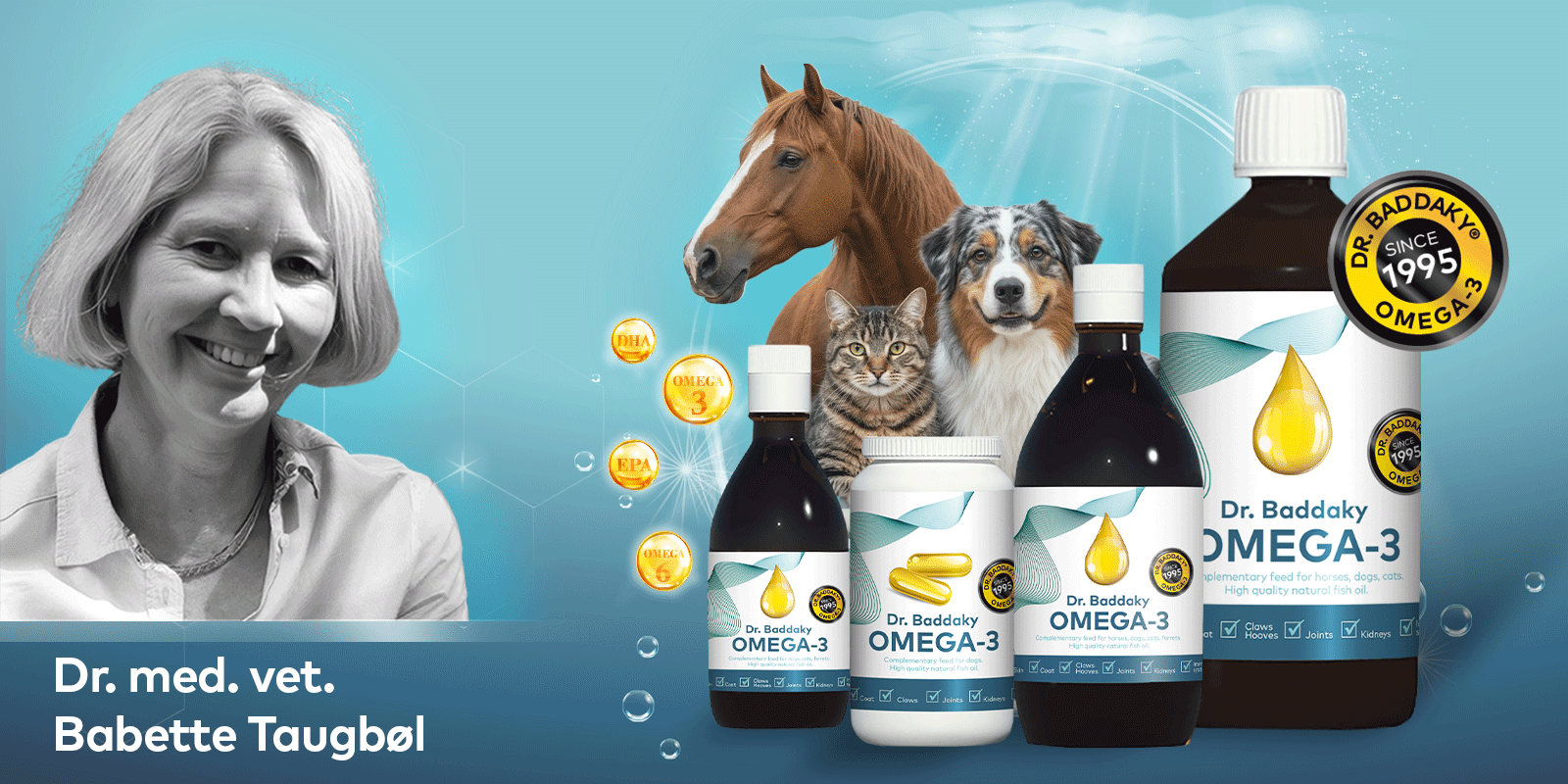
Dr. med. vet. Babette Baddaky Taugbøl is a board-certified specialist in dermatology for dogs and cats (Sweden) and has worked with omega-3 fatty acids for over 20 years.
Dr. Baddaky Omega-3 
Developed by Dr. Baddaky Taugøl herself, Dr. Baddaky Omega-3 is a high-quality omega-3 supplement with EPA and DHA to support skin health from the inside out. Certified by Friend of The Sea, and each batch is lab tested against 200 toxins and heavy metals. All to make sure it’s pure, clean and highly effective.
Subscribe to our newsletter
Subscribe to our newsletter and don't miss our latest innovations in the fields of allergy, dermatology, and specialized pet nutrition.