Does your dog scratch, lick or bite a lot? It may have a skin allergy. Vets call this atopic dermatitis. In 2026, international experts published new advice on how to treat it. Here is a short summary of what that means for you and your dog.
What is atopic dermatitis?
Your dog is allergic to something in its surroundings, such as house dust mites, pollen or moulds. This makes your dog itchy, and the skin gets inflamed more easily.
The allergy usually does not go away. But with the right approach, you can keep the symptoms well under control, so your dog is bothered as little as possible.
Treatment in two steps
- First, stop the itch. Your vet treats the itch and the red patches until they are completely gone. Important: do not stop the treatment too early, even if your dog already seems better. Otherwise the itch often comes back quickly.
- Then keep the skin calm. Once the skin is healthy again, the goal is to prevent new itchy flare-ups. You do this with regular care, even when your dog has no symptoms.
What can you do yourself?
- Bathing. Wash your dog about once a week (or less often) with a mild shampoo. This helps the skin. There is good proof that this works.
- Caring for the skin. Some products strengthen the skin’s protective layer. The experts refer to studies with products from Dermoscent:
- ATOP 7® Mousse: slightly less itching and calmer skin when used twice a week.
- ATOP 7® spray and Essential 6® spot-on: slightly less itching and calmer skin in dogs with mild symptoms.
- ATOP 7® spot-on: dogs that were already on medication stayed itch-free for longer when they were also bathed every week and given ATOP 7® spot-on.
- Good bacteria on the skin. Useful bacteria also live on the skin. Products with probiotics (‘good’ bacteria) can help with mild symptoms. In one study, Linkskin® Spray clearly reduced symptoms in dogs with a skin allergy. Use it regularly, not only when the itch flares up. More research is being done on this type of product.
-
Omega-3 fatty acids. Fatty acids from fish oil can be a useful extra for an itchy dog. The experts suggest giving them alongside your vet’s treatment, or on their own if your dog has only very mild symptoms. They help a little with the itch and the red skin, but usually not enough to work alone. Their main benefit is this: dogs that take medicine for the itch may need less of it when they also get fatty acids. Side effects are rare and mild, such as a slightly upset stomach.
Dr. Baddaky Omega-3 is a high-quality fish oil from Norway with lots of the omega-3 fatty acids EPA and DHA. You give it once a day with food, as an oil or as capsules. The experts’ advice is about fatty acids in general, not about one specific product. Ask your vet whether it suits your dog.
- Fighting fleas. Fleas make the itch worse. Keep up flea control all year round.
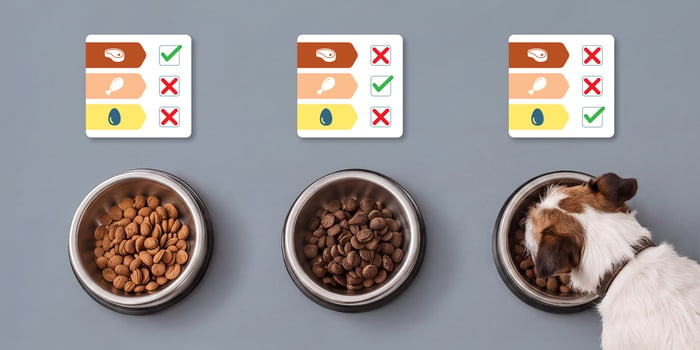
- Testing the food. Is your dog itchy all year round? Then food may play a role. Your vet may suggest a food trial of 6 to 10 weeks. Only a trial like this can properly show a food allergy. A blood or skin test is not reliable for this.
- Watching for infections. Do you see new red spots or scabs, or does the skin smell different? Then see your vet. An infection often makes the itch much worse.
These products work best when you use them regularly, alongside the treatment from your vet. Side effects were usually not seen.
Immunotherapy: tackling the cause
Most treatments work on the itch. Immunotherapy is the only treatment that works on the cause: the allergy itself. Your dog is given very small amounts of the things it is allergic to. This way, its body slowly gets used to them. The experts recommend this treatment for all dogs that are allergic to things in their surroundings.
With a blood test or skin test, your vet finds out which things in the surroundings your dog is allergic to. For these, the tests are suitable. The treatment is then made especially for your dog.
Patience is important. Immunotherapy does not work straight away. It often takes months before you see a difference. So keep going for at least a year. According to the experts, sticking with it is one of the main reasons the treatment succeeds. So you really make the difference!
Every dog is different
There is no single solution that works for every dog. Together with your vet, you make a plan that suits your dog, you and your budget. In doubt, or not going well? Then contact your vet.
Source: Mueller RS et al. Treatment of canine atopic dermatitis: updated guidelines from the International Committee on Allergic Diseases of Animals (ICADA). Veterinary Dermatology, 2026. doi:10.1111/vde.70128
Subscribe to our newsletter
Subscribe to our newsletter and don't miss our latest innovations in the fields of allergy, dermatology, and specialized pet nutrition.
Share article: