
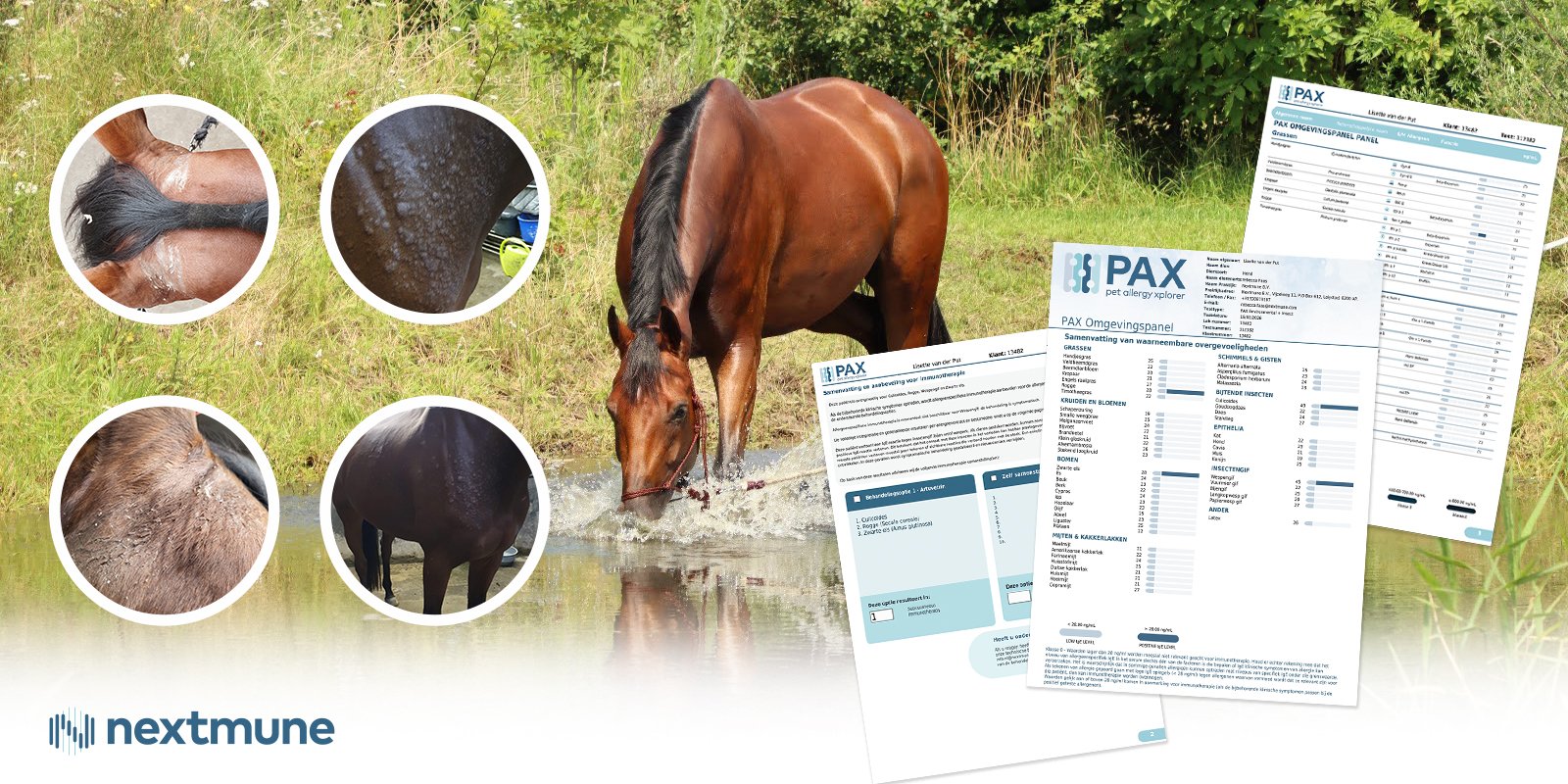
Sometimes allergies in horses start very subtly… a bit of rubbing here, some itching there. But with this four-year-old KWPN mare, it soon became clear that something more was going on.
The first signs
At first it seemed mild: seasonal itching. But over time the pattern became clearer—and more uncomfortable for the mare.
She developed:
- Severe itching around the mane and tail base
- Flaky, irritated skin
- Small bumps on one side of the neck and shoulder
- Increasing itchiness on the belly and in the groin area
For many horse owners this may sound familiar. These signs are typical of Insect Bite Hypersensitivity (IBH), an allergic reaction to tiny biting midges called Culicoides.
Finding the cause
To better understand what was triggering the mare’s reaction, a blood test was performed. This test helps identify which allergens the horse’s immune system reacts to.
The results confirmed sensitivity to Culicoides insects. In addition, the mare also showed reactions to several environmental allergens, including certain pollens.
Based on these results, a personalized immunotherapy plan was created.
Training the immune system
In horses with allergies, immunotherapy works by gradually teaching the immune system to react less strongly.
By administering small, controlled amounts of the relevant allergens, the body can slowly build tolerance. This treatment—known as allergen-specific immunotherapy (ASIT)—is currently the only therapy that aims to modify the underlying allergic disease, rather than just managing the symptoms.
A gradual treatment plan
The treatment began with a build-up phase, during which the dose was slowly increased. This was followed by a maintenance phase.
Throughout the process the mare was carefully monitored:
- How did her skin respond?
- Was the itching decreasing?
- Were there any side effects?
The protocol was adjusted when needed based on her individual response.
More than just injections
Alongside immunotherapy, several management strategies were implemented to help support her skin and reduce exposure to insects:
- Using an eczema rug during peak insect activity
- Regular bathing with a skin-supporting shampoo to maintain the skin barrier
- Ongoing monitoring of her skin throughout the allergy season
Combining these approaches helps protect the skin and reduce flare-ups.
The result
Over time, the improvement became clear.
The mare now:
- No longer rubs her mane or tail
- Shows no signs of bumps or inflamed skin
- Has no evidence of chronic skin irritation
She is comfortable again, behaves normally, and maintains her full athletic performance.
What we can learn from this case
This case highlights the importance of early recognition of allergies in horses. With targeted testing and a personalized treatment plan, immunotherapy can help achieve long-term control of allergic disease.
When combined with proper management, this approach can give horses with allergic skin conditions the chance to live comfortable, active lives again. 🐎