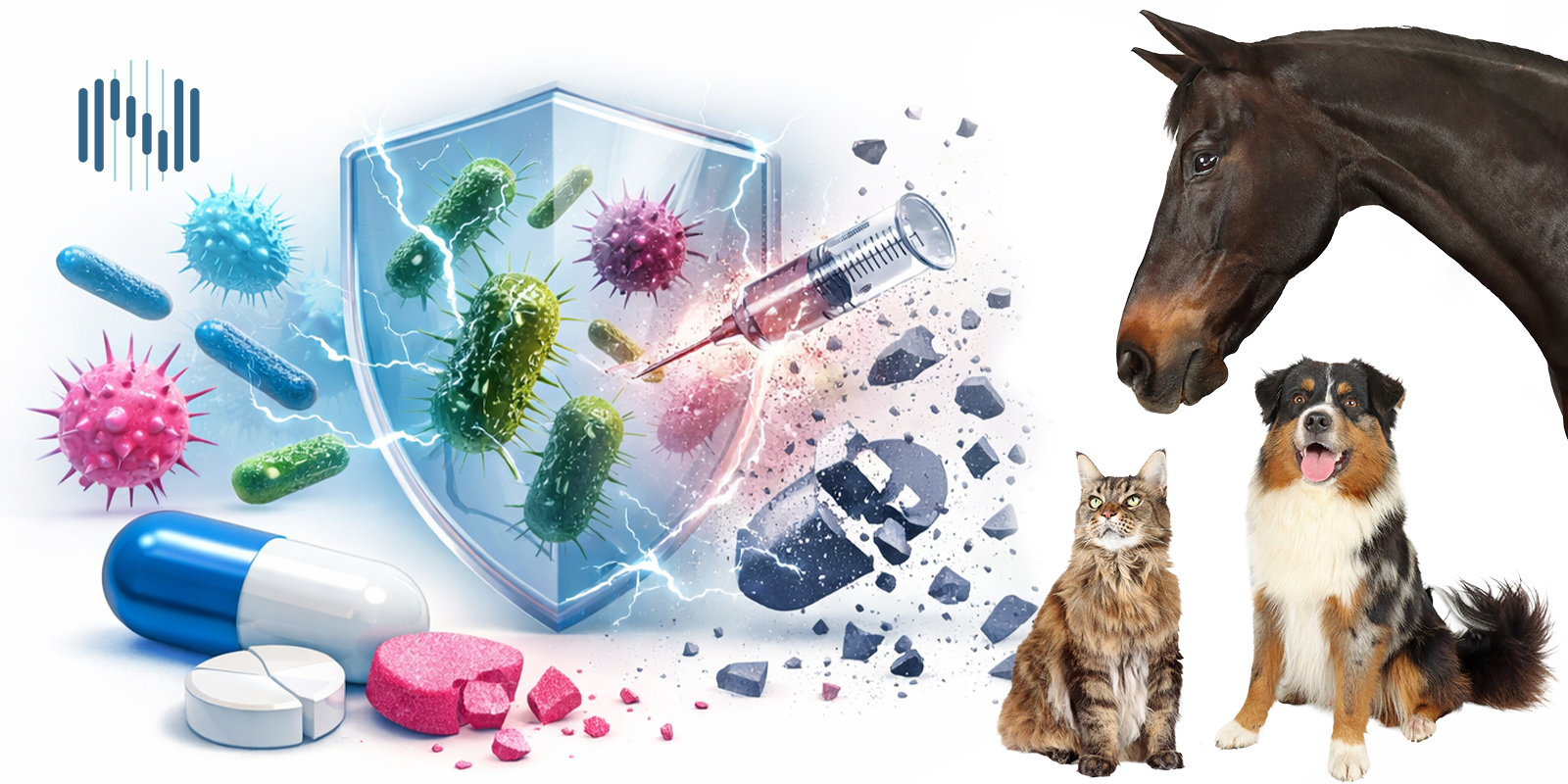
Skin infections are one of the most common reasons antibiotics are prescribed. For example, red or moist patches, scabs, irritated skin folds, or inflamed hair follicles.
But did you know that antibiotics are not always necessary?
Why not start with antibiotics straight away?
Antibiotics are important medicines. That is exactly why we want to use them only when they are truly needed.
When an animal receives antibiotics as a course of treatment:
- The medication does not only affect the skin infection
- It also affects bacteria in the gut and on the rest of the skin
- This increases the risk that bacteria become resistant
For this reason, international guidelines recommend starting with topical treatment for superficial skin infections whenever possible.
What is topical treatment?
Topical treatment means treating the skin directly, for example with a medicated shampoo, spray, or lotion that has an antiseptic effect (such as chlorhexidine).
This approach has several important advantages:
✅ It works exactly where it is needed
The rest of the body is barely affected.
✅ Lower risk of resistance
Antiseptic products work in multiple ways against bacteria. This makes it much harder for bacteria to become resistant compared to antibiotics.
✅ Often just as effective
Studies show that a properly followed medicated shampoo protocol can be just as effective as oral antibiotics for mild to moderate superficial skin infections.
When is topical treatment enough?
Often in cases of:
- Superficial skin infections
- Moist, red patches
- Inflamed skin folds
- Mild to moderate inflammation of hair follicles
- Maintenance treatment in animals with an underlying skin condition (such as allergies)
When are antibiotics still necessary?
- In deep skin infections
- When large areas of the body are severely affected
- If the animal is systemically unwell (for example fever or lethargy)
- If topical treatment does not lead to sufficient improvement
Your veterinarian will always make a careful decision based on the individual situation.
How to use a medicated shampoo effectively
The success of topical treatment depends greatly on correct use. Important points include:
- Use the product exactly as prescribed (often 2–3 times per week at the start)
- Leave the product on the skin for 5–10 minutes before rinsing
- Rinse thoroughly
- Use additional leave-on products for specific spots if advised
Clear instructions and consistent application make a significant difference.
Why are we doing this?
By choosing topical treatment more often:
- We reduce unnecessary antibiotic use
- We lower the risk of recurrent infections
- We help preserve the effectiveness of antibiotics for the future
- We provide effective and responsible care for your animal
Topical therapy is not a “lighter” treatment — in many cases, it is simply the smartest first step.
Product recommendations:
CLX-Wipes
Practical cleaning wet wipes for dogs, cats, horses and other animals, containing chlorhexidine and Tris-EDTA. Great for daily cleansing of paws, interdigital spaces and skin folds. Great for easy use in-between baths.
Dermoscent PYOclean Shampoo
PYOclean® Shampoo is a purifying shampoo for skin in dogs and cats. It is ideal to help balance the skin microflora and to help support healthy skin.
Dermoscent PYOspot
PYOspot® is a purifying care to help in the management of generalized skin microbiota imbalances (pyoderma and Malassezia dermatitis). It is ideal for dogs with an unbalanced skin flora presenting with pimples or scabs and prone to recurrent episodes.
Peptivet Shampoo
Deep cleansing and moisturising shampoo for dogs and cats. Formulated with chlorhexidine that is proven to be effective against bacteria.
Subscribe to our newsletter
Subscribe to our newsletter and don't miss our latest innovations in the fields of allergy, dermatology, and specialized pet nutrition.
Share article: