


Insect Hypersensitivity
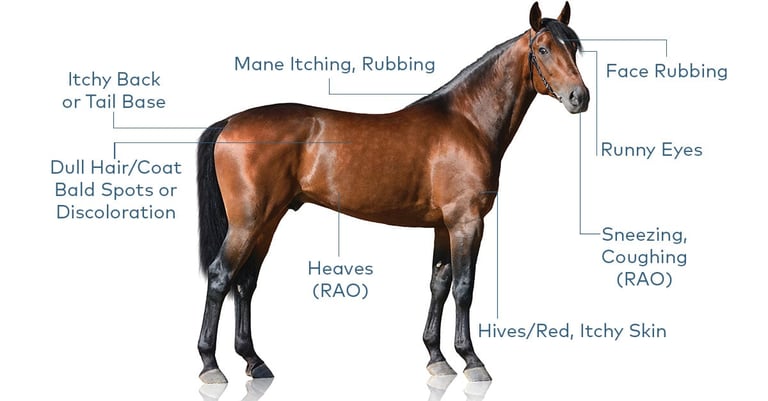
A variety of allergens can cause a reaction, but the most common cause of allergies in horses is known to be insect hypersensitivity (Marti et.al, 2015). Seasonal allergy dermatitis, often referred to as the “summer itch,” is caused by Culicoides, commonly known as the biting midge. Horses suffering from this condition present symptoms including mild to severe itching (often along the mane, tail, and back) and may have open, bleeding sores, bald patches, as well as tail and mane hair loss. Other biting insects (such as horn flies, black flies, and stable flies) can cause allergic reactions, often resulting in fluid-filled hives, swelling, or wheals on the skin upon exposure.
Environmental Triggers
Environmental allergies in horses are often triggered by prolonged exposure to mold, organic dust, and/or endotoxins present in hay and straw, which can lead to Recurrent Airway Obstruction, or RAO (Horohov, et.al, 2005). The prolonged inhalation of dust particles, pollens, or mold spores can lead to neutrophil accumulation, which may cause bronchospasm, ultimately resulting in RAO. In addition to pollens and mold spores, the dust may also contain bacteria, insects, animal waste, and other components that can directly enter the breathing passages at high concentrations, further contributing to the development of RAO. The major symptoms of RAO are coughing, wheezing, labored breathing, and nasal discharge. Horses that are severely affected by RAO may exhibit weight loss, exercise intolerance, and abdominal muscle hypertrophy, due to overworking the muscles associated with their labored breathing (commonly known as the “heave line”) ( Pirie, 2014).
Conclusion
As allergies are becoming more prevalent in horses, we need to start looking at ways to diagnose and reduce or eliminate the uncomfortable symptoms associated with these allergies. Symptoms including itching, scratching, and hair loss are the main signs of an allergy and can vary by cause. The pattern of distribution of these symptoms on the horse’s body, the geographic location of the horse, and the time of the year the symptoms occur, is all helpful information when identifying the underlying cause for allergies. Likewise, allergy testing is also an effective way to pinpoint the offending allergens. Once the root cause is identified, eliminating the exposure to these allergens can greatly reduce your horse’s suffering.
References
Pirie, R.S., (2014). Recurrent airway obstruction: a review. Equine Vet J, 46(3): 276-88.
Sign up to our monthly newsletter
Receive the latest news, great promotions, exclusive discount codes and tips & advice from our specialists.
Share article:


